The Fridge in the Foyer: What a Shelves-and-Surplus Experiment Taught Us About Neighbourliness
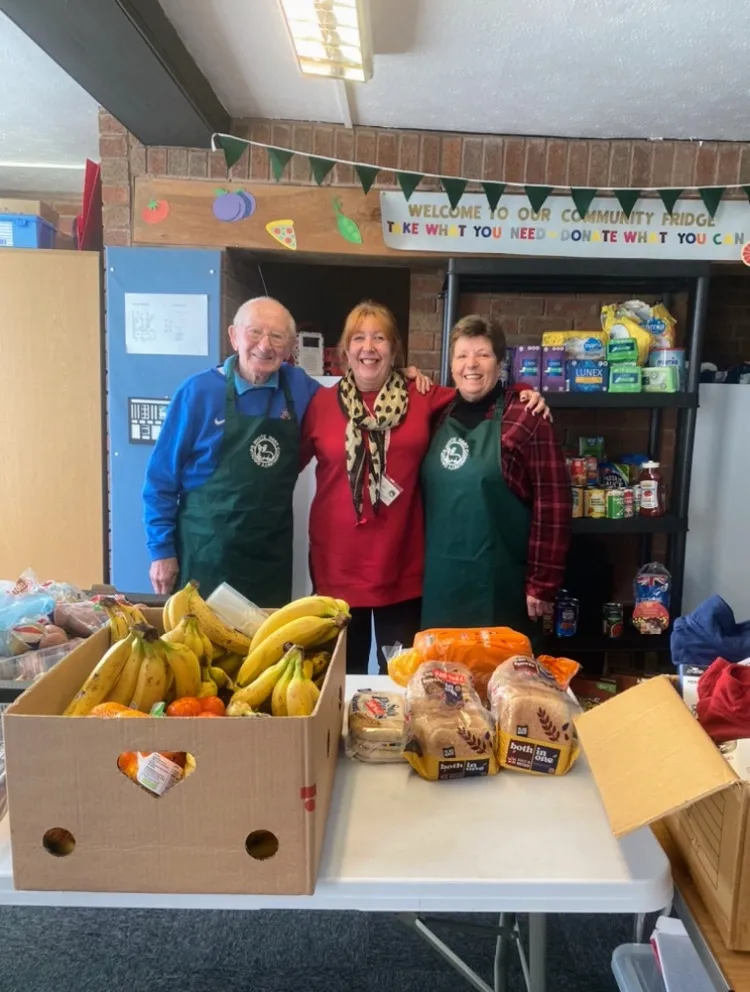
Photo: community fridge volunteers fresh vegetables crates community centre, via www.whcg-atherstone.org.uk
There is nothing remarkable about the fridge itself. It is a white, slightly scuffed domestic unit that stands just inside our entrance hall, humming away beside the noticeboard. Yet since we opened it last spring, it has become the single most talked-about thing at Al-Baraca — more so, frankly, than any dinner, fundraiser or annual meeting we have ever held.
The premise could not be simpler. Supermarkets and local grocers are contractually obliged to waste vast quantities of perfectly edible food: bread a day before its display date, vegetables with cosmetic blemishes, chilled items approaching their best-before mark. Rather than let it go to landfill, a handful of nearby stores now drop crates with us twice a week. Neighbours take what they need. No referral, no means test, no register of names. The door of the fridge is open to whoever walks through ours.
Why No Questions Is the Whole Point
When we first proposed the idea, some committee members worried it might be seen as a food bank — and that some who needed it might feel unable to come. That is precisely why we modelled it instead on the community fridge movement, which has grown rapidly across the UK in recent years. Food banks, vital as they are, require vouchers and eligibility criteria. A community fridge asks nothing. The retired teacher collecting a bag of salad and the warehouse operative picking up a week's worth of bread are indistinguishable at the shelves, and that is deliberate.
The result has been a far broader cross-section of neighbours than any of our organised activities attract. On a typical Friday morning you will find Somali aunties inspecting the yellow-stickered produce alongside Polish pensioners, young NHS night-shift workers stocking up before bed, and students from the flats on the high road who until now had never set foot inside the building. People who have lived four doors apart for a decade are meeting for the first time — over a shared crate of misshapen carrots.
The Quiet Diplomacy of a Shared Shelf
We had anticipated practical challenges: refrigeration capacity, food safety, volunteer rotas. What we had not anticipated was how naturally conversation would flow. Interfaith dialogue is a phrase much used and rarely embodied, yet it turns out that a Sikh delivery driver explaining to a Muslim volunteer why the temple sends surplus chapatis on Wednesdays achieves more in five minutes than many a formal panel. A church newsletter now lists our fridge opening hours; the imam has mentioned it after Friday prayers; the local Hindu community centre donates trays from its festival meals.
Nobody planned this as an interfaith project. It simply became one, because hunger and generosity require no translation. One of our longest-serving volunteers, who asked not to be named, put it well: "Everyone bargains with God in their own way, but everyone's granny taught them not to waste food."
The Rules of the Fridge
A handful of house rules keep things running smoothly, and we share them here for any group considering something similar:
- Take what you need, leave what you can. The fridge works on trust, and in twelve months trust has not been broken.
- Use-by dates are firm; best-before dates are guidance. Volunteers check every crate on arrival.
- No uncooked meat, fish or shellfish — our insurance and our conscience both prefer it that way.
- Everything is free. Anyone found selling it on will be gently, then firmly, reminded that this is not a supply chain.
A Starter Guide for Other Halls, Mosques and Church Rooms
Several organisations in the borough have asked how to begin. Our honest answer: start smaller than you think, and start before you feel ready.
- Find a fridge and a socket. A donated domestic unit is fine to begin with. Locate it where people naturally pass — a foyer beats a back room every time.
- Approach surplus schemes early. Supermarkets, greengrocers, bakeries and apps that redistribute surplus all need reliable collection points. Consistency matters more than volume.
- Register with your local authority's environmental health team and complete basic food hygiene training. It is less daunting than it sounds.
- Recruit four volunteers minimum so no single person becomes a bottleneck.
- Expect the unexpected. We have received forty aubergines in one delivery and, memorably, a pallet of premium yoghurt. Flexibility is a core skill.
What the Fridge Has Actually Fed
The numbers matter: roughly 3.2 tonnes of food redirected from landfill in our first year, and an estimated 240 households served. But the truer measure is softer. It is the WhatsApp group that formed organically, spanning five faiths and four languages. It is the teenager who now volunteers every Saturday and has applied to study food policy. It is the woman who told us she came the first time for the vegetables and kept coming for the company.
We spend a great deal of energy as community organisations arranging events designed to bring people together. It turns out that sometimes the most effective thing you can do is put a fridge in the hall, fill it, and get out of the way.
The fridge is open Tuesday and Friday mornings, 9.30am to 12.30pm. If your business has surplus to donate, or you would like help setting up a fridge in your own hall, contact the association office — the kettle is usually on.