Ink, Patience and a Borrowed Classroom: The Tuesday Night When Our Community Slowed Down
Photo: Dietmar Rabich, CC BY-SA 4.0, via Wikimedia Commons
There is a moment, roughly twenty minutes into our Tuesday calligraphy session, when the room goes almost completely silent. The kettle in the corner clicks off. Someone exhales. Twenty adults, most of whom have never held a reed pen in their lives, lean over sheets of rice paper and concentrate on a single stroke.
For a community association more used to the noise of toddler groups, food distributions and five-a-side arguments spilling out of the car park, this quiet is new. And judging by the waiting list, it is welcome.
From a Spare Room to a Waiting List
The class began last autumn almost by accident. A volunteer with a talent for Arabic script offered to run a one-off workshop during what we expected to be a quiet evening. Eleven people turned up. The following week, there were nineteen. By the new year, we were putting out extra chairs borrowed from the hall next door and turning people away with an apologetic note about the following Tuesday.
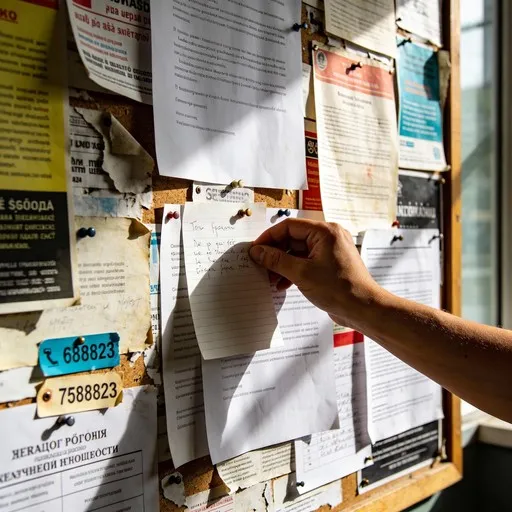
Today the session runs at full capacity most weeks, with a waiting list that has become a small administrative challenge in itself. What surprises many people — though perhaps it should not — is who is on the list. Yes, there are mosque regulars wanting to write the Quranic verses they have heard all their lives. But there are also two retired teachers from the street behind the hall, a young nurse who came for the first time because, in her words, 'I scroll too much and make nothing,' and a couple from the neighbouring estate who saw the poster outside the Post Office and fancied trying something new.
Nobody is turned away on grounds of faith, language or experience. The only prerequisite is a willingness to sit still for ninety minutes.
Why Slow Crafts Are Having a Moment
There is a well-documented appetite in Britain right now for things that cannot be rushed. Adult colouring books, knitting circles, repair cafés — the pattern is familiar enough that sociologists have written whole papers about it. But watching it happen in our own hall is different from reading about it.
Calligraphy demands something screens rarely ask of us: repetition without reward, precision without speed. A single letter in the Arabic tradition — the alif, a simple vertical stroke — can take a beginner an entire session to get right. Our tutor, who trained in the Thuluth style and is patient to a degree that borders on the heroic, makes students practise the same stroke for weeks before moving on.
'It is not about the letter,' he tells the room, again and again. 'It is about what you become while making it.'
Several regulars describe the session in the language of wellbeing without being prompted to. One woman told us it was 'the only ninety minutes of the week my brain stops running.' Another said she had started coming after a bereavement and found the rhythm of ink and breath steadier than anything else on offer. We are a community association, not a clinic, and we would not claim therapeutic expertise. But we notice what people come back for.
A Room That Reflects the Street
Walk past the classroom window on a Tuesday evening and you will see something quietly representative of modern Britain. A hijab beside a flat cap. English calligraphy — copperplate, no less, taught by one of our own volunteers — sharing a table with Arabic script. A man in his seventies asking a teenager how to hold the pen; the teenager, to everyone's delight, showing him.
When we first opened the association's doors two decades ago, our rooms were filled almost exclusively by people who already knew each other, often from the same handful of streets and the same places of worship. That is no longer the case, and we would argue it is a strength. The calligraphy class is perhaps the clearest expression of it: a tradition rooted in one heritage, offered openly, and embraced by a neighbourhood that has become, like so many across the UK, more mixed and more curious than the old assumptions allowed.
The English calligraphy strand, added in January after requests from attendees, has been equally popular. There is something fitting about a community association teaching people to write beautifully in the language of their adopted home and in the script of their heritage, side by side.
The Practical Bits
The class runs every Tuesday, 7pm to 8.30pm, in the first-floor room at our centre. All materials — pens, ink, paper — are provided, and there is no charge, though a suggested donation of £3 helps cover supplies and keeps the biscuit tin stocked. Beginners are always welcome and no prior knowledge of Arabic or calligraphy is required.
Because of demand, we now ask people to register in advance through the office or the website, and we run a simple rotation so that those on the waiting list are offered a place within a few weeks. If you have been meaning to try something slower, quieter and entirely un-digitised, this is your invitation.
Twenty adults learning to write beautifully in 2025 may not change the world. But on a grey Tuesday in our corner of the UK, it changes the evening — and, judging by the faces at the door when it ends, rather more than that.