Coins, Cards and a Cuppa: Six Months of Teaching Our High Street to Tap
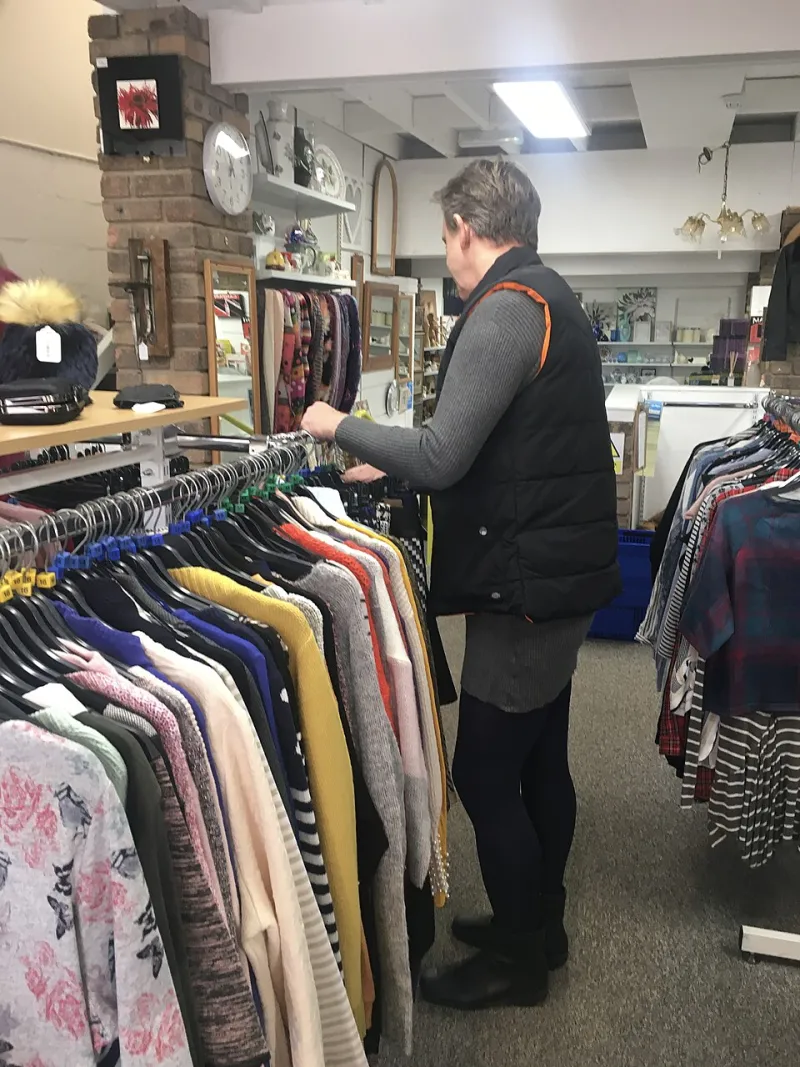
Photo: Buckingham8, CC0, via Wikimedia Commons
For as long as anyone could remember, the money tin on the tea trolley had been the beating heart of our charity shop. A battered biscuit container, lined with a rubber glove, it rattled with pound coins and copper change from the morning rush of shoppers buying jigsaws, winter coats and the occasional china figurine nobody quite needed.
Last autumn, the committee voted to try something different: a contactless card reader. The decision was practical — fewer shoppers carry cash, and the float was becoming a nightly headache — but it was also a gamble. A good number of our volunteers are retired, and a good number of our shoppers are, too. How do you go digital on a high street where some people still count out exact change from a purse with a popper?
The First Week: Fear, Fumbles and a Few Walkouts
The reader arrived in a box nobody wanted to open. Margaret, who has volunteered on the till for eleven years, was blunt: "I can't even work my son's television remote. What chance have I got with that?"
The first week was, by any honest measure, shaky. A gentleman from the allotments left his carrier bag on the counter rather than learn to tap. A woman in her eighties asked, quite reasonably, whether the machine could "read her pension". Two volunteers quietly asked to be moved to the sorting room at the back, where the only technology is a steam iron.
But something else happened too. A young dad bought a buggy board for his toddler, tapped his phone, and was out the door in twelve seconds. A carer buying for an elderly client used her own card without a fuss. Slowly, the shop floor split into two rhythms — the rattle of coins and the soft chirp of the reader — and, mostly, they learned to coexist.
Training Sessions Fuelled by Custard Creams
Rather than hand out a laminated instruction sheet and hope for the best, we ran four informal training evenings in the community hall next door. No PowerPoint. No jargon. Just a volunteer from the local college — a patient nineteen-year-old named Aisha — a projector borrowed from the youth club, and an unending supply of custard creams.
The sessions worked because they treated the volunteers as learners, not fools. We practised refunds on dummy transactions. We role-played the awkward moment when a card is declined. We wrote our own phrase book: "Tap it on the bottom there, love" became the approved script, and it has worked on hundreds of nervous customers since.
By the third session, Margaret had stopped calling the reader "that thing" and started calling it "the machine" — which, we agreed, counted as progress.
The Complaints Were Fair, So We Listened
Not every objection was about technology. Some shoppers told us, rightly, that a cashless till excludes people who manage their money in cash — budgeting week to week, envelope by envelope. Others pointed out that not everyone has a bank card at all.
So we adapted. The money tin stayed. The card reader was positioned beside it, not instead of it, and every volunteer was trained on both. We added a small sign in plain English: Cash and cards both welcome — no need to rush. For shoppers who wanted to pay by card but were anxious about it, staff offered to do the tapping for them, holding the reader out like a doctor offering a thermometer.
The complaints didn't stop, but they changed tone — from resistance to suggestion. One regular proposed a "quiet hour" on Wednesday mornings for shoppers who feel overwhelmed, cash or card, and it has quietly become one of our busiest slots.
What Survived the Switch
Six months on, the numbers tell part of the story. Card payments now account for roughly two-thirds of transactions, and takings are up — people give more when they don't have to find the exact change. Three volunteers who nearly quit are still with us, and one, Margaret, now trains the new intake with the confidence of a woman who has conquered something.
But the more interesting changes are the ones you can't measure. The handwritten price tags survived — felt-tip on old greeting cards, because, as Margaret put it, "a printed sticker tells you the price; my writing tells you someone cared." The tea trolley still does its rounds at eleven. The biscuit tin still rattles, less often now, but it rattles.
What Digital Inclusion Actually Means
If there is a lesson from our six-month experiment, it is this: digital inclusion is not about forcing everyone onto a card reader. It is about making sure that when the high street goes digital — as it will, like it or not — nobody is left standing at the counter holding coins they can't spend.
That means patient training, not patronising leaflets. It means keeping the old ways alive alongside the new, for as long as people need them. And it means recognising that for some of our neighbours, learning to tap a card is not a small thing at all — it is the difference between staying connected to their local shop and quietly staying home.
The card reader and the money tin now sit side by side on the same trolley. We rather like the symbolism. Our community, like our shop, can hold both — and it is stronger for it.
If you would like to volunteer on the till, join a future training session or simply come in for a browse, the shop is open Tuesday to Saturday. Cash and cards both welcome — no need to rush.