Grey Hair, Sharp Minds: The Case for Giving Our Grandparents a Real Seat at the Table
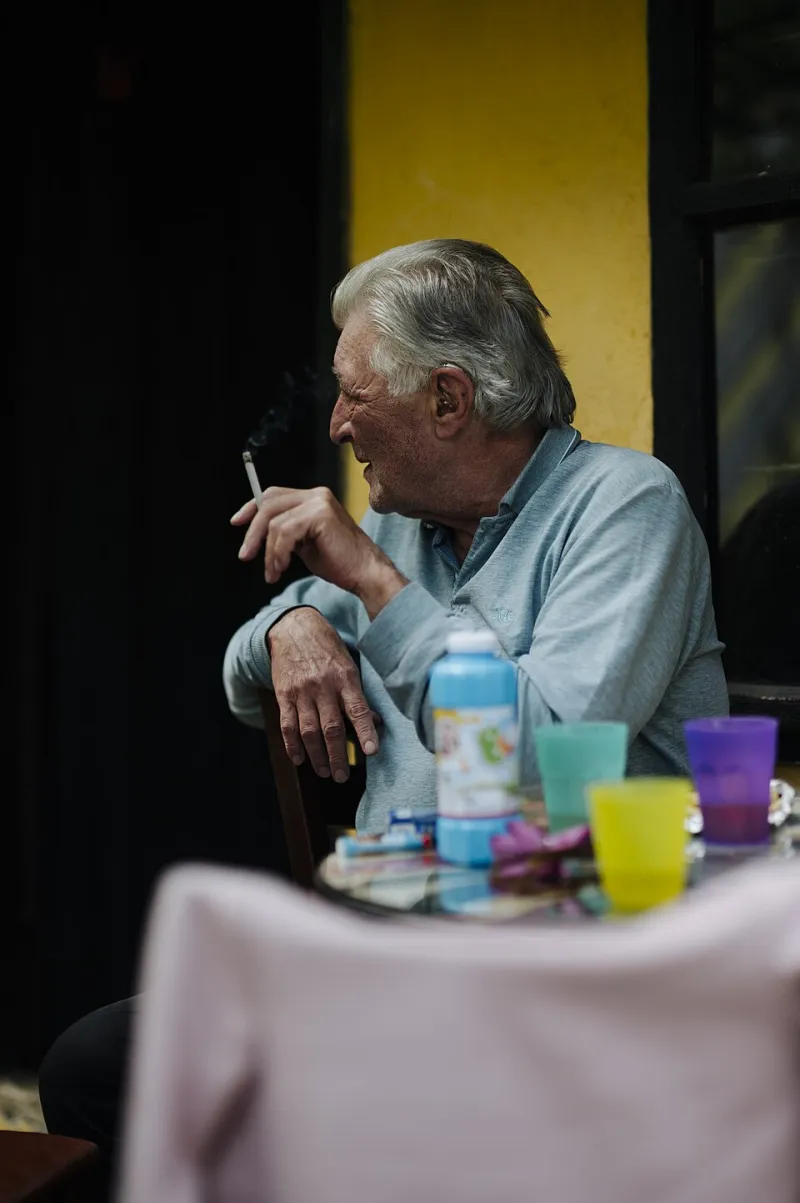
Photo: Shixart1985, CC BY 2.0, via Wikimedia Commons
There is a moment familiar to anyone who has served on a community committee. A debate runs long, positions harden, and then an elderly member — often someone who has sat quietly through the whole meeting — offers a single sentence that reframes everything. 'We tried that in 1998. The parking was the problem, not the price.'
At Al-Baraca, we have come to recognise these moments for what they are: free consultancy from people whose knowledge of this neighbourhood stretches back further than our own records.
The Memory That Isn't in the Minutes
Haji Musa, who is 81 and has lived on the same street since arriving in the 1970s, can tell you which of three candidate venues for a wedding will flood, which landlord is reliable, and which bus route will be cut next year. He has never held a formal position. He simply knows.
'I don't read the council papers,' he told us, laughing. 'I read the street.'
That kind of knowledge — granular, lived, accumulated — is precisely what community associations lack when they rely solely on the enthusiasm of younger, busier volunteers. Committees rotate. Elders remain.
What We Lose by Keeping It Informal
The difficulty is that our reliance on elders is accidental rather than designed. Their input arrives in corridors, at the mosque door, over tea after Friday prayers. It is valuable but unrecorded, and crucially, it is not accountable to anyone — which means it can be dismissed just as easily as it is sought.
There is also a fairness question. An organisation that claims to serve all generations but consults only its most active members is not neutral; it is simply reflecting whoever has the loudest voice on the day.
Three Models Worth Trying
We have been looking at structures used by other associations across the UK, and three stand out.
First, a formal Elders' Council with a small budget, a named liaison on the main committee, and a standing invitation to comment on any decision affecting the building, services or events. Consultation, not veto — but consultation on the record.
Second, paired decision-making: every major working group includes one older member and one younger one. The pairing matters. It prevents the elders' group becoming a parallel committee, and it transfers knowledge in both directions.
Third, and simplest, a legacy review: before finalising any significant plan, the committee must document that it asked members of fifty years' standing what had been tried before. One page. Ten minutes. It would have saved us from a marquee booking that ignored a well-known drainage problem last summer.
The Cost of Waiting
The obvious counterargument is that age does not guarantee wisdom, and that formalising elder input risks entrenching voices that may resist change. Both concerns are legitimate. But the answer is better structure, not less consultation — defined terms, rotating membership, and a clear advisory remit.
The starker risk is temporal. Our founding generation is in its eighties. Every year we operate without a structured way to capture what they know, we accept the loss of knowledge that took fifty years to build and will take one funeral to erase.
Haji Musa put it more plainly. 'You ask me everything when the problem has already arrived. Ask me before.'
We intend to. A proposal to establish a formal Elders' Council will go before the committee this quarter, and we would welcome views from members of every generation — including, especially, those who remember how we got here in the first place.