From Cupboard to Cornerstone: The Sisterhood That Rebuilt a Room and Rewrote the Rules
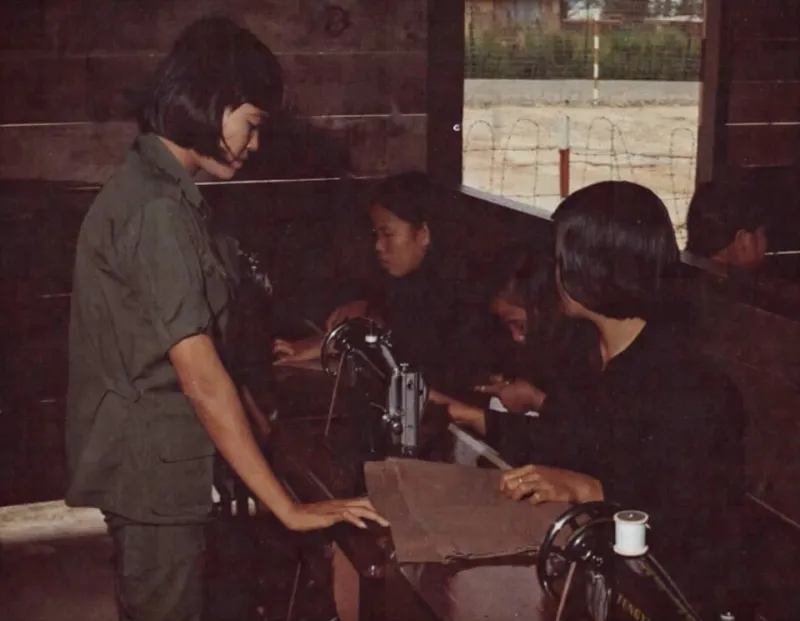
Photo: SP5 Ronald Delaurier, Public domain, via Wikimedia Commons
A Room Nobody Wanted
Ask any committee member to name the most used room in the building and you will get the same sheepish answer: not the main hall, not the meeting room with the projector, but the narrow space off the rear corridor that, until the spring of 2023, held stacked chairs and a broken laminator.
The Sisters' Circle never asked for the storeroom. They simply noticed it — door ajar, boxes gathering dust — and asked whether they might tidy it out and use it on Tuesday mornings. What followed has become one of the quiet successes of our association's recent history.
Starting With What Was There
The first sessions were modest. Three volunteers, two donated sewing machines and a kettle carried in from a member's kitchen. Word travelled the way it always does — through school gates, after prayers, over fences — and within a term the Tuesday sewing class had a waiting list.
The group did not stop there. A retired practice nurse among the members offered to run a monthly health talk, covering everything from blood pressure checks to navigating GP appointment systems. A coffee morning followed, then a clothes-swap, then an informal session where women could get help filling in forms, from blue badge applications to council tax queries.
None of it required funding applications, consultants or a launch event. It required space, trust and the willingness to begin before everything was perfect.
Why Women's Provision Gets Left Until Last
There is an uncomfortable pattern in community buildings across the country. Main halls get booked for weddings and funerals; the large rooms absorb the visible, high-traffic activities. Women's groups, when they are considered at all, are frequently handed whatever remains — an awkward hour, an awkward room, an assumption that they will fit around everything else.
The Sisters' Circle's experience suggests this is not just unfair but short-sighted. The Tuesday sessions now regularly draw twenty-five to thirty women, many of whom had never set foot in the centre before. Several have gone on to volunteer elsewhere in the association. Two have enrolled in college courses after gaining confidence in the sewing class. The health talks have prompted at least a dozen attendees to see their GP about conditions they had been ignoring.
In other words, the room nobody booked has become one of the best-returning investments the association has made — at a cost of precisely nothing.
Practical Lessons for Other Associations
The group's organisers are refreshingly unsentimental about their success, and their advice is worth repeating:
- Audit your dead space. Almost every community building has a room that exists only to store things. A fortnight's clearing can change that permanently.
- Let women set the agenda. The sewing class came first because that is what members asked for. The health talks and form-filling sessions grew from conversations at those tables, not from a top-down plan.
- Keep the threshold low. No membership fees, no registration forms, no requirement to explain why you are coming. Turn up, sit down, have a brew.
- Budget for the small things. The association eventually invested in proper lighting and a second-hand machine. Modest sums, transformative results.
A Busier Future for a Small Room
There is talk now of extending provision — a possible English conversation group for newer arrivals, and a Saturday slot for mothers with young children. The storeroom, renamed by common consent as the Sisters' Room, can no longer comfortably hold everyone who wants to attend.
That is a good problem to have, and it poses the question the association must now answer properly: when a group demonstrates this level of need and this level of initiative, the response should not be to squeeze them harder into a cupboard. It should be to plan women's provision as deliberately as we plan anything else.
The Sisters' Circle proved what is possible with a borrowed room. The least the rest of us can do is make sure they never have to borrow one again.