Little Teachers, Big Lessons: When the Children Become the Interpreters at Home
There is a particular kind of pride on a mother's face when her daughter corrects her pronunciation — and a particular kind of awkwardness too. Walk into the Al-Baraca hall on a Wednesday evening and you will see both, sitting side by side at folding tables, working through phonics workbooks designed for six-year-olds and being completed by women in their fifties.
For years, our tutoring club existed for one purpose: helping local children keep pace at school. What nobody planned for was what happened next. The children got good at English — very good — and then began carrying that fluency home like a heavy schoolbag full of responsibility.
The Letter on the Kitchen Table
Ask any family in our community and they will describe the same scene. A brown envelope arrives from the NHS, or the council, or the Home Office. It is placed on the kitchen table. And it waits — sometimes for days — until a fourteen-year-old comes home from school and opens it.
'I used to feel ashamed asking my son,' admits Abdul, who arrived in the UK from Somalia in 2016 and works nights at a distribution depot. 'He is my child. But who else could read it? Now he reads it, and then he teaches me the words I did not know. He is strict with me, like his teacher.'
Abdul laughs as he says it, but the picture he paints is more complicated than a joke. Children as young as ten are explaining appointment letters, translating at parents' evenings, sitting in on phone calls to the GP surgery. Schools call this 'young interpreting'. The families we spoke to call it simply part of growing up.
The Homework Hotline Nobody Planned
What began as necessity has, in places, become something warmer. Three of our teenage volunteers — all former pupils of the Wednesday club — now run what they jokingly call the homework hotline. It is nothing formal. A WhatsApp group, a few phone numbers passed between aunties at the mosque, an understanding that if a form needs filling in before Friday, someone will ring you.
'I helped Mrs Rahman apply for her husband's carer's allowance over three evenings,' says Sumaya, seventeen, revising for her A-levels in between. 'She made me chapatis the second time. Now if I don't ring her for a week, she rings me to check I'm eating properly.'
The reversal is not always comfortable. Teachers warn us that children can absorb household stress when the burden of translation falls too heavily on small shoulders. That is a genuine concern, and one we take seriously. But the families themselves describe something more textured: a relationship deepened by dependence flowing in an unexpected direction.
'My grandmother taught me to read the Qur'an,' Sumaya says. 'Now I teach her to read the post. I don't think one cancels out the other. I think we're even.'
What the Wednesday Club Is Learning
The adults' phonics sessions grew out of this — organically, without a strategy paper or a funding bid. A tutor noticed mothers lingering at pick-up, asking questions in the doorway. Somebody put out extra chairs. Six months later there is a waiting list.
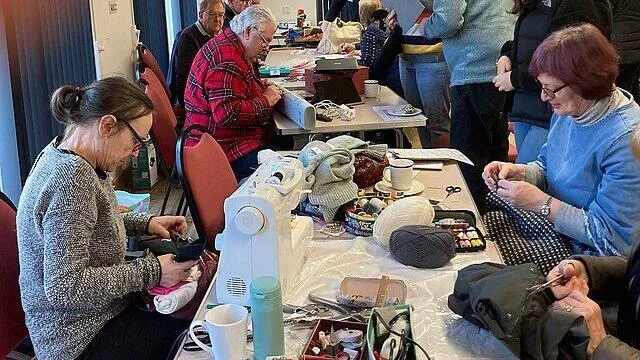
The sessions look nothing like a classroom. There are no exams and no certificates. There is a lot of tea. Volunteers use real documents — appointment letters, tenancy agreements, school reports — because that is the English people actually need. When a woman practises the phrase 'I need an interpreter, please', she is not learning vocabulary. She is learning to insist on her own rights.
Advice for Other Community Groups
We are often asked how other associations might support multilingual households without accidentally making children into unpaid staff. Our lessons so far, offered humbly:
- Create adult spaces children don't have to fill. If parents have somewhere to practise English among peers, the pressure on children eases immediately.
- Use real paperwork. Generic textbooks cannot compete with the letter actually sitting on someone's table.
- Recruit teenagers properly. If young people are going to help, give them training, boundaries and recognition — treat them as volunteers, not go-betweens.
- Never make literacy a condition of belonging. The families who need the most help with forms are often the ones doing the most for the community already.
- Feed people. Every genuine conversation we have witnessed began over food.
Even, As Sumaya Says
There is a temptation to frame bilingual children as heroes carrying their families, or as victims burdened by them. Both stories flatten the truth. What we have watched unfold on Wednesday evenings is neither sacrifice nor struggle alone — it is a household renegotiating itself, patiently, one letter at a time.
The grandmothers are still teaching. The grandchildren are still learning. It just turns out the curriculum runs in both directions now, and neither generation would have it any other way.